Heretics Verboten!

Europe Doesn’t Need the Euro? Another religious tract to study on Sundays.

All of this is kind of like religion, don’t you think? First you’ve got some prophets who come out of the wilderness (the political class preaching the virtues of the euro, come hell or high water), then what they say gets labeled as heresy by the faithful (by the “man on the street” who wants to keep his deutschmark), then the euro faith overcomes this persecution, establishes itself as the true universal teaching and becomes orthodoxy. Then the next voice out of the wilderness comes along and the game starts all over again, etcetera and so forth already.
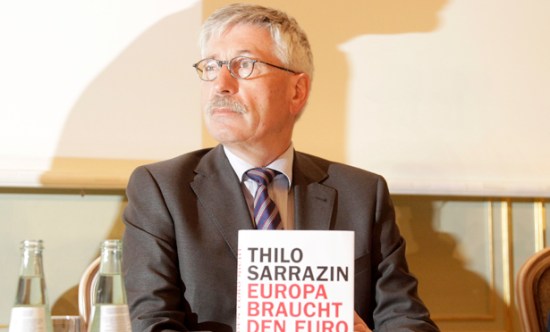
Don’t get me wrong, I don’t beleive that Thilo Sarrazin is a full-fledged prophet or anything (I just think he wants to make a buck, I mean euro). But he’s not a full-fledged heretic, either. And that’s something the euro high priests could never admit to.

The euro, in Sarrazin’s view, is just the old German deutschmark extended to a lot of countries with less robust currencies.

Germany, in other words, is being used as a guarantor of other countries’ debts.

“The German political class bet that the political union would follow shortly thereafter almost as a matter of natural law, because without that the common currency wouldn’t be stable. That bet has failed.”

Germans are hostage to their sense of not wanting to be responsible for Europe’s failure.

Germans are hostage to their sense of historical guilt.

“Pro-euro Germans are driven by that very German reflex, that we can only finally atone for the Holocaust and World War II when we have put all our interests and money into European hands.”

“Angela Merkel to like the friendly woman on the navigation system in my car.”
The Next Dumb Allusion To The Berlin Wall

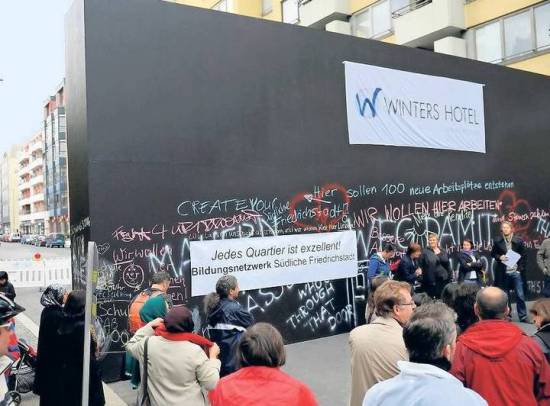
Something called the Peace Wall, being part of Berlin’s Biennale, which will focus on political art this year (isn’t all art political?), has been constructed just down the road from Checkpoint Charlie by a Macedonian artist to “underline the gap between the upper Friedrichstrasse – characterized by fancy shops and expensive flats – and the poor southern part of the road which heads to the multi-ethnic Kreuzberg district.”

You know, it’s all about the gentrification “issue” and that terrible gap between rich and poor so prevalent in, uh, Germany.

“A wall is a symbol of division,” the artist says. “And is in itself capable of highlighting invisible gaps.”

True, I guess. But this lady clearly doesn’t know what the real Berlin Wall was about (the fewest out there who make comparisons like these do) or she would have chosen another object to work with. There were no invisible gaps about the Berlin Wall at all. It was for way real, concrete in the truest sense of the word, and had nothing at all to do with any of these fairy tale divisions artists living in free societies today have to struggle with all the time like they do, or seem to want to.

Hey, this is art. And art doesn’t have to have anything to do with reality, does it? Whether you call it political or not.

„Sie erreichen mit dieser Mauer, dass Sie diese Ecke erst recht sterben lassen.“

CliffsNotes For Mein Kampf?

I don’t know, man. Adding critical commentary to Mein Kampf? It’s pretty full of critical commentary already if you ask me.

And as a schoolbook? Not good. With kids the way they are these days, if you have to start including commentaries in the text of Mein Kampf to debunk Hitler’s “arguments,” you’re only going to give them ideas.

“Das Ziel ist die Entmystifizierung des Buches.”

Germans Now Allowed To Shoot At Pirates

On land, even. No, not these pirates. These pirates down here.

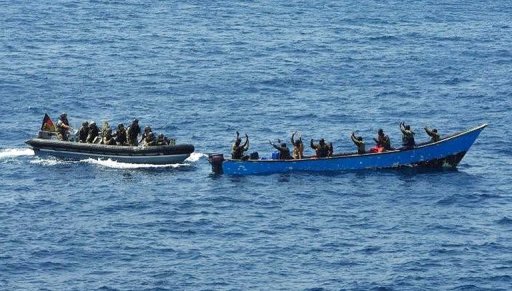
Well, they won’t actually be shooting at the pirates per se (that would be bad), but more like at their equipment and stuff. You know, at the loot and the booty on the beaches? This will make the pirates run away and never come back again or at least become good or something.

It is all part of the EU’s anti-pirate Operation Atalanta off the Somali coast so it’s OK for Germans to do this, really.

The German opposition continues to criticise the operation as risky overreach for the forces and has vowed to vote against it.

Hallo, ist da jemand?

Is there anybody out there?

I like old Helmut Schmidt, and we’re talking old (93). I like that he goes out of his way to smoke in front of everybody, especially there where you’re not supposed to. I also think it’s cool that he doesn’t have a cell phone and prefers writing something called “letters” with something called “paper and ink.”  And I don’t even mind that he thinks the Internet is “menacing.” I mean, why should he be the only one in Germany who doesn’t think that way?

I do wish, however, that he would take that big leap and finally leave the SPD while he still has the time to do so. I don’t think he ever belonged there in the first place. But maybe that’s just me.

„Ich telefoniere überhaupt nur noch selten. Wahrscheinlich habe ich das auch früher nie wirklich gern getan. Ich habe immer die Schriftform bevorzugt, und zwar die briefliche Schriftform.“

German Historian Unclear As To What Happened Between 1939 and 1945

Completely clueless as to what happened in Germany and environs during what appears to have been a rather turbulant period roughly between 1939 and 1945, a young German historian has written a book in which he asks his readers to ask their grandparents if they might possibly know.

“Whatever it was, it must have been a pretty big deal,” the historian said. “And as my studies now indicate, immediately after this whatever it was event, conversations about it between parents and children appear to have been nearly impossible as it was, well, hell if I know. That’s part of the mystery. And that’s why I’ve written this book.”

Time is running out. The answer to how a cultured, civilized nation did something “I dunno” (text slightly altered here) lies in the minds of the dying generation that took part, many of whom are ready and willing to talk at the end of their lives.

SPD Doesn’t Need Günter’s Help Anymore

“We can continue to screw up our image just fine all on our own, thank you,” A party spokesman said.

With comrades like these who needs enemies?

“Seine Zeit ist einfach vorbei.”

Ya Gotta Have Dreamers

The FDP (Free Democratic Party) may now be fighting for its very survival again in Germany, but this is certainly nothing new. They have always had it tough here, and with good reason: They are the only classical liberal (as in free market) party to be found here for miles around.

The astounding thing about the FDP is that they can even get any votes at all in Germany. Terms like “free market” and “privatization” make most Germans cringe. And if they absolutely positively have to use bad words like that, they prefer more watered-down terminology like “Soziale Marktwirtschaft” instead, an imaginary German construction promising “a middle path between socialism and laissez-faire economic liberalism.” Socialism, in other words.

Anyway, with a big state election coming up in North Rhine-Westphalia next month (end of the month?), the FDP is now pulling out its big guns, as little as they are. Or at least one or two FDP politicians are. One guy called Frank Schäffler, for instance, has seriously suggested a radical program change to include “the elimination of all state aid and the partial privatization of the state-run public broadcasting services ARD and ZDF” in Germany. The key words here are “in Germany,” folks. 

Is this guy a visionary or just plain deranged?

Dream on, FDP. But please, keep on dreaming.

„Mehr Mut zu Recht und Freiheit“

We Don’t Do Humility

We self-righteous high priests of the German political left, I mean. It’s just not our thing.

But what we do do is regularly transform a little imaginary something we call “collective guilt” (World War II guilt, there is no such thing as Communist East Germany guilt) into new products (poems) with new perpetrators (Israel) which we market at irregular intervals to cover our countrymen’s never-ending demand for ritual redemption which of course will never be satisfied, or so we lead them (and us) to believe.

“Membership in the Waffen-SS is normally not a great beginning for a career as keeper of the global conscience. Were I to have joined the Nazi military at age 15, I too would likely be a bit wary of criticizing Holocaust survivors. But that is exactly the problem: Humility was never Grass’ thing. His expertise lies more in self-righteousness.”

An Old School German Intellectual Poetry Attack Par Excellence

Günter Grass has it all: That fat and sassy moral high ground he’s king of the hill of, that left-wing obsession for defending brutal regimes in the name of “world peace,” that Nobel Prize for literature and that SPD party membership book (I’m not sure which one gives him more legitimacy here).

But above all else, he’s got that which all successful peacenik artists and Künstler the world over must invariably have: That inability to keep their mouths shut when it comes to addressing issues they clearly know nothing about.

At the moment Grass is worried about how “the nuclear power Israel is endangering the already fragile world peace” (think Iran) and has written a shockingly predictable poem about it. It must be a real humdinger, too, but to be fair I must admit that I haven’t read it yet and most certainly never will because I’m waiting to read his poem about Iran’s threat to world peace first. I assume that he will publish that one next week, but you know what they say about when you assume things…  Blah, blah, blah. Meet the new school. Same as the old school.

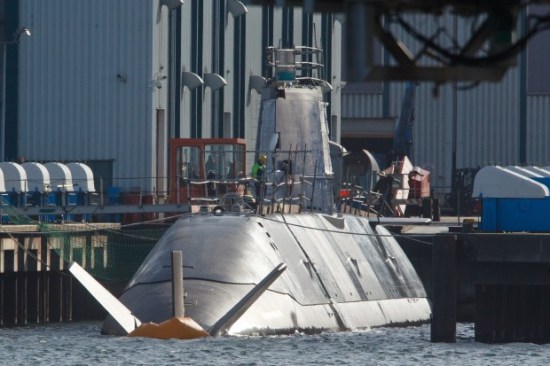
Israel currently has three Dolphin submarines from Germany – one half-funded and two entirely funded by Berlin – two more are currently under construction, and the contract for a sixth submarine was signed last month. Dolphin-class submarines can carry nuclear-tipped missiles, but there is no evidence Israel has armed them with such weapons.