Trump Still Really Evil But…

German Carmakers Jump on Potential U.S.-China Tariff Truce. This is how Germany works, folks.
BMW

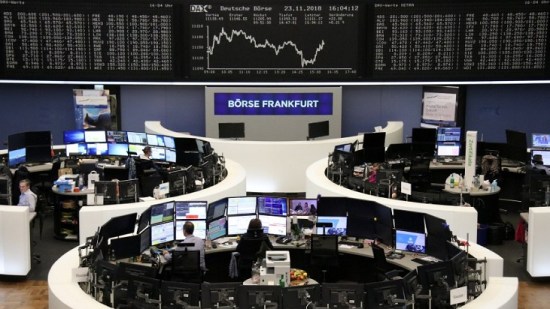
BMW AG rallied the most in more than three years after U.S. President Donald Trump said China had agreed to remove painful tariffs on imported American-made cars shipped to the world’s biggest automotive market. Daimler AG and Volkswagen AG also rose sharply.

BMW and Daimler, which export sport utility vehicles from U.S. plants to China, stand to be the biggest gainers from a potential reduction of tariffs. Six of the ten best-selling U.S. auto imports to China are made by the two German luxury auto manufacturers.

Autobosse treffen Trump Kurse von BMW, VW und Daimler schnellen in die Höhe.
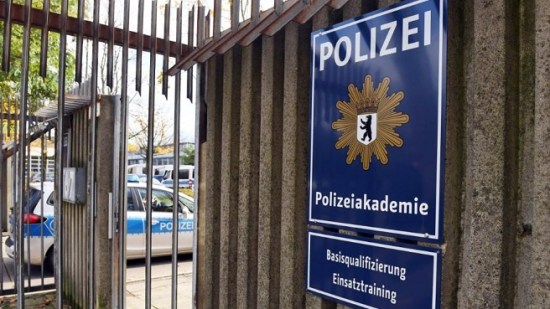
German Is A Tough Language To Learn

Even if you’re, well, a German cop-to-be in Berlin.

Police

And the English language is at fault. Sort of.

Germany’s cops are bombarded with countless criticisms today, but this one definitely stands out – it emerged that police cadets in Berlin, many of whom have immigrant backgrounds (some 40 percent), have difficulty using… the German language.

Many cadets attending Berlin’s police academy have “fundamental difficulties” writing in German without spelling or punctuation errors, revealed Tanja Knapp, the newly appointed head of the institution. She said it was really disappointing to learn that these cadets are unable to produce written texts. And since after every stakeout or chase you have to write a report, that’s discouraging news.

Part of the problem is that too much emphasis is placed on learning English, Knapp said. Over the years, Berlin has evolved into a truly international city where English is sometimes spoken more frequently than German.

“Of course, it makes sense to be able to speak English to the capital’s many tourists,” Knapp said. “But if the basic required level of German is too low, then the focus should be on German.”

Berlins Polizeischüler sollen künftig weniger Englisch- und dafür mehr Deutschunterricht erhalten. Es gebe bei vielen Polizei-Azubis „grundsätzliche Schwierigkeiten“ mit der Sprache.

Let The Christmas Cheer Begin!

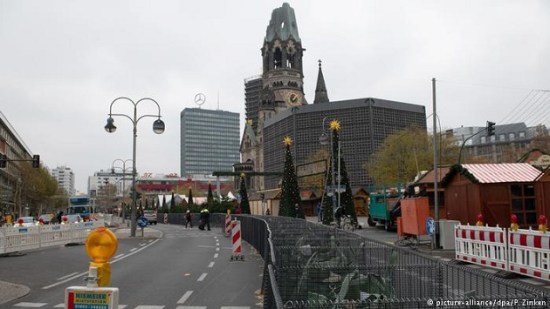
New fortified security measures at Berlin Christmas market.

Christmas

All week, workers have been installing 160 giant, square, lattice-work frames on the perimeter of Charlottenburg’s Breitscheidplatz, the site of the fatal attack.

Enormous sand-and-stone-filled bags have been lowered into each frame, which have all been bolted to the next to form a long row. Narrow access points have been protected with extra bollards.

During the market, private guards will patrol the grounds, joined by a heavy presence of uniformed and plainclothes police officers.

The Berlin Senate has said the elaborate €2.5 million ($2.9 million) installation will provide “unprecedented protection” against trucks weighing up to 40 tons.

This reminds me of German oddity 234. Germany is a country that now places the ugly security controls, bollards and heavily armed police it used to have on its national borders at Christmas markets and Volksfeste around the country instead.

Artificially Intelligent, Maybe

But is it smart?

Technical progress by decree?

AI

Germany is often criticized for sluggish levels of digital investment, particularly in AI. The government wants to invest €3 billion before 2025 to try and close the knowledge gap with world leaders in the field.

Germans are smart, of course, but they can’t even spell AI properly. They call it KI. Ridiculous. And when you look at the amount being invested, well, maybe they’re not all that good at math anymore, either.

“This amount is much less than companies, such as Microsoft or Google, invest in AI in a single year. So people should not think that Germany will suddenly become a world leader in the field, able to compete with the US and China.”

Your Tax Euros In Action

You know the drill. These studies are routinely published (in this case by the German Federation of Taxpayers) demonstrating how tax money is burned by the government.

U-Boot

There were some real beauties in this report, too. But my personal favorite is the Case of the Squandered Submarines. The German navy has these six way cool new fuel cell driven submarines that set the German taxpayer back three billion euros. The only problem here is that none of them are currently operational and have spent most of their time dry-docked. Additionally, there are only three submarine commanders available to command these vessels. One of these subs has only been deployed once – in thirteen years. Wow. With a navy like this who needs an enemy?

And I’m sure the next tax increase is already in the works.

Die sechs U-Boote der deutschen Marine mit Brennstoffzellenantrieb gehören zum Modernsten, was die Nato in diesem Bereich zu bieten hat. Drei Milliarden Euro kosteten sie. Das Problem: Laut Schwarzbuch ist keines dieser U-Boote derzeit tatsächlich einsatzbereit.

To Rival Silicon Valley?

Good luck with that. Honest. It’s great that big industry finally wants to pump some money into Berlin again but keep your pants on already, Siemens.

Siemensstadt

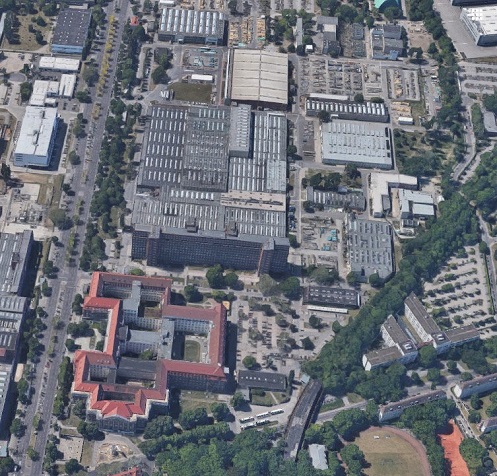
The German engineering giant has unveiled plans to build a huge innovation campus in Berlin, harking back to its early days in the German capital and aiming to rival Silicon Valley in the United States.

Investment in a new campus to be called Siemensstadt 2.0 (Siemens City 2.0) will come in at €600 million ($680 million) on offices and residential accommodation, as well as laboratories and production plants, according to an agreement signed by Berlin Mayor Michael Müller and Siemens executive member Cedrik Neike on Wednesday.

The plan is to transform the historic Siemens site in Berlin-Spandau into a location for research and startup centers by 2030.

Der Weltkonzern baut in Berlin für 600 Millionen Euro seinen Zukunfts-Campus. Mit 2000 Wohnungen, Forschungslabors, Geschäften, Schulen und eigenem S-Bahn-Anschluss

German Of The Day: Vorsitz

That means chair (of a company). Or chairman. Or chairwoman in this case.

Vorsitz

And chairwoman of the CDU is what Angela Merkel now no longer wants to be.

Chancellor Angela Merkel of Germany on Monday took her first concrete steps to move away from political life, saying she would give up leadership of her conservative party while vowing to finish out her term as chancellor until 2021.

Ms. Merkel made her announcement, in a meeting of conservative leaders, after two disastrous results in regional elections that saw her party and its allies slump to near-record lows.

“Zeit, ein neues Kapitel aufzuschlagen.”

They Still Don’t Feel Anything

They’re still numb. And if they’re honest, they’ll admit it. Germany’s Willkommenskultur has always been a myth.

Feel

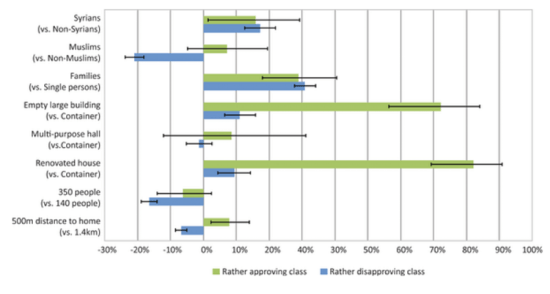
We asked Germans what they really felt after Angela Merkel opened the borders to refugees in 2015.

German chancellor Angela Merkel’s decision in 2015 to keep her country’s borders open and give shelter to hundreds of thousands of refugees was praised by commentators and leaders around the world. Her decision was also approved of by thousands of German citizens who welcomed refugees and provided clothes, food, and other support.

The term welcome culture, or Willkommenskultur, was frequently used in political debates and the media to describe the events of autumn 2015.

But a year later, the picture had changed dramatically. By the end of 2016, the public debate had shifted to focus on the so-called refugee crisis, or Flüchtlingskrise, alongside the religion of refugees and migrants, and limits to Germany’s capacity to integrate them. The change of perspective was reflected in discussions about upper limits – Obergrenzen — of the numbers of refugees that should be allowed to enter the country.

Our recently published research suggests that welcome culture has never been as widely embedded in German society as public debates in 2015 would make us believe.

Despair Is In The Air

But there ain’t nothing new about it.

Despair

Germany’s New Politics of Cultural Despair – The Authoritarian Revolt: The New Right and the Decline of the West (a book by Volker Weiss).

Nothing against new takes about how the West is in decline (again? still?) but the West has been in decline for as long as anyone alive can remember, not to mention for as long as a whole bunch of folks who are no longer with us could.

Take Oswald Spengler and his The Decline of the West, for instance – from 1922! Nothing against declination, folks, but how much longer is this decline of the West going to last? As a wise man once said: What has been will be again, what has been done will be done again; there is nothing new under the sun.

In modern times, fears of social change and spiritual impoverishment can always tempt the malcontented to imagine that the present is an interregnum destined to yield to a new age of faith and wholeness.

The Two-Party Is Over?

And it couldn’t have happened to a nicer bunch of folks. Or Volk, if you prefer.

SPD

The German Social Democrats’ (SPD) existential crisis can no longer be treated as a typical party crisis. The party captured a mere 9.7% of the vote in regional elections in Bavaria this month, and it is trailing both the populist Alternative für Deutschland (AfD) and the Greens in national opinion polls. With another important regional election fast approaching in Hesse, polls indicate that the SPD will lose still more support, albeit not as dramatically as in Bavaria…

Most likely, the fall of the CDU/CSU-SPD duopoly will undermine German hegemony in Europe, even if no other country can replace Germany in that role. At the same time, the weakening of the SPD will diminish the socialist faction in the European Parliament, where a similar eclipse of two-party rule could be in the offing. Yet without the twin pillars of the European People’s Party and the Party of European Socialists, the parliament will be incapable of making even insignificant decisions. As Germany and the SPD go, so goes Europe.