Condescension 2.0

None of this started with Donald Trump, you know. Just in case you were wondering.

Germany

Meet the new German problem. Same as the old German problem.

Why, then, do confident Germans increasingly dislike the United States?

It is complicated.

Since 1989, Germany has worked hard on its post-unification image as a largely pacifistic country. It is eager to teach other nations how to conduct themselves peacefully and to pursue shared global goals such as reducing global warming or opening national borders to the world’s refugees.

Implicit in Germany’s utopian message is that postmodern Germans know best what not to do — given their terrible 20th-century past, with the aggressions of imperial Germany and later the savagery and Holocaust perpetuated by Hitler’s Third Reich.

Yet being guilt-ridden does not equate to being humble (never a German strong suit)…

German Intelligence Intelligent Enough

Or at least that’s what one intelligent German intelligence official said today. “We have a proven track record.”

Spies

“And we can monitor our own elections and watch out on our own for any disinformation spread by Russia, thank you. Without any American help, I mean. That’s because we’re offended. And we want you Americans to know that we’re offended. And you Russians, too. And the rest of the world, for that matter. That’s just how intelligent we are. So write disinformation down in a safe place somewhere and stick it where the sun don’t shine.”

Earlier this month, Adm. Mike Rogers, director of the National Security Agency, said the U.S. watched Russia hack into France’s computer networks during the country’s election. U.S. officials warned their French counterparts of the hacking before it became public.

It’s Election Season In Germany

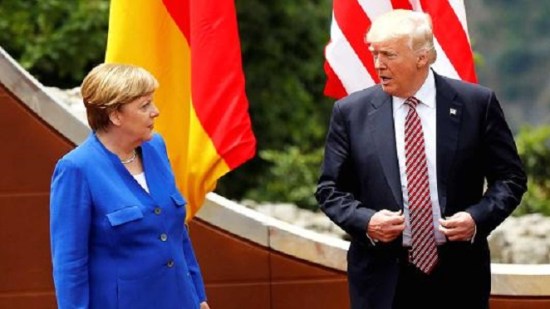
As was noted yesterday. So now the political parties here are openly competing with one another to see who can bash Donald Trump the best. That article below was originally entitled: “SPD overtakes Chancellor Merkel with its Criticism of Donald Trump.”

SPD

It’s kind of like the arms race. Only instead of mutually assured destruction it’s mutually assured dumb down time, with active participation by ARD and co. I mean, instead of maybe addressing the actual issue of, for example, just why it is that European countries that pledged back in 2014 (or was it a few years before that?) to invest 2 percent of their GDP in NATO defense spending are still not doing so, just attack the guy who refuses to ignore it.

Anyway, the SPD, all set to lose the coming national election resoundingly, can easily afford to take Angela Merkel’s recent campaign sloganeering about Trump America’s unreliability a notch higher and come out actively calling for open opposition against him, whatever that may mean (with the SPD one never really knows what that or anything else they say might mean). Knock yourselves out, comrades.

Angela Merkels Äußerungen zur deutsch-amerikanischen Zusammenarbeit unter Donald Trump haben für Furore gesorgt. Die SPD setzt nun noch einen drauf. Kanzlerkandidat Martin Schulz fordert, sich der Politik des US-Präsidenten entgegenzustellen.

German Of The Day: Schaumschläger

That means “foam basher.” And that means somebody who makes a lot of noise but doesn’t deliver, a hot-air artist. Hmm. There sure is a whole lot of foam in that beer mug she’s holding down there, don’t you think?

Foam

“The times when we could fully rely on others are to some extent over — I experienced that in the last few days,” Merkel told her supporters, according to Bloomberg. “We Europeans must really take our destiny into our own hands.”

That’s the moment when she took that foamy beer mug into her own hands, I guess. Or maybe somebody had just handed it to her after it had finally reached the end of this pipeline.

Breath deeply, everyone. It’s election season in Germany. And if you can’t pick up a few votes by bashing Donald Trump over here then you can’t poor foam out of a boot.

Die Kanzlerin brachte den Frust des G7-Gipfels vom Wochenende mit, die Parteivorsitzende das Wissen darum, dass Kritik an den USA und vor allem an Trump bei Wählerinnen und Wählern in Deutschland bestens ankommt. Der Hauptgegner im Wahlkampf, die Sozialdemokraten, spielen diese Karte schon länger. Und beide haben Europa wieder entdeckt.

The Lying Press?

No. But the biased press? In Germany, when it comes to Donald Trump?
Trump

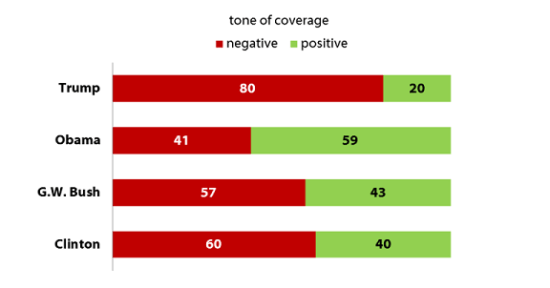
I’d have to say yes to that one. After taking a look at this recent study done at Harvard, that is – Harvard, that infamous hotbed for right-wing extremism.

When it comes to reporting about Donald Trump’s fitness for office by Germany’s ARD (Channel One),  for example, 98 percent of this reporting is negative. Now that’s what I’d call objective journalism, folks. 98 percent of people in the real world can’t agree on anything, as we all well know, but things are different here in Germany (and in North Korea, too). The ARD, by the way, is one of the state-run “public” television channels that anyone who lives here is forced to subsidize, whether he or she watches it or not – whether you even own a television or not. Do any of you out there remember Der Schwarze Kanal? I didn’t think so.

98 percent? That only shows us that there is something 100 percent wrong with the ARD.

Only 3 percent of Trump’s U.S. coverage explicitly explored the issue of Trump’s fitness for office. European journalists were less restrained with the exception of BBC journalists, who are governed by impartiality rules that prohibit such reporting.[21] Journalists at ARD, Germany’s main public broadcasting outlet, are not governed by the same rules, and Trump’s suitability for the presidency was ARD’s leading topic in January, accounting for a full fifth (20 percent) of its Trump coverage. ARD stayed on the issue in its February coverage, when it consumed 18 percent of its Trump coverage. In March and April, Trump’s fitness for office got less attention from ARD, but it nonetheless accounted for about 10 percent of ARD’s coverage. Even that reduced amount exceeded the level of any of our seven U.S. outlets in any month. And ARD’s journalists were unequivocal in their judgment—98 percent of their evaluations of Trump’s fitness for office were negative, only 2 percent were positive.
German Of The Day: Schlecht

That means bad. Or böse. That means worse. You know, like in “bad, very bad.”

Trump

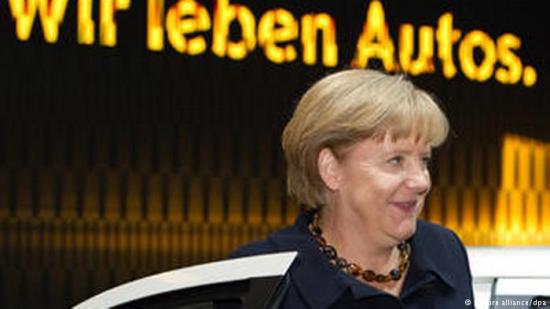
President Donald Trump has reportedly reignited tensions with his EU counterparts after calling the Germans “very bad” for their trade surplus with the U.S. The president vowed to block German car exports to the U.S. during a meeting with top EU leaders on Thursday, according to German news magazine Der Spiegel.

I don’t know, folks. Whether this is true or not, I have a very böse feeling about all of this. Not.

“The Germans are bad, very bad. Look at the millions of cars they’re selling in the U.S. We will stop that.”

But Germany Would Defend Its NATO Allies If US-Amerika Attacked

This just in: Majority of Germans wouldn’t support defending NATO allies in Russia conflict. Why doesn’t that surprise anybody?

NATO

According to the US think tank, which interviewed people in European countries, the US and Canada, “NATO’s image is improving on both sides of the Atlantic.” The Alliance enjoys high approval ratings in Poland and the Netherlands (both on 79%). Germany ranks third in the list on 67%, followed by Canada (66%), the US and United Kingdom (both 62%), France (60%) and Spain (45%)…

The results showed that Germany would support military intervention by NATO less than any other country. Only 40% of respondents would back military support for a partner in “serious military conflict” with Russia.

Auch in Deutschland stehen die meisten Befragten hinter der Allianz – bei einem Konflikt mit Russland würde jedoch nur eine Minderheit ein Partnerland verteidigen.

Suspicious Object Found At SPD Headquarters

And it wasn’t the Schulz effect, either.

Stegner

German police gave an all-clear on Monday at the headquarters of the Social Democratic Party (SPD) in Berlin after it was evacuated due to a suspicious object found in the mail room.

The object, being the face and attached body of SPD federal chairman and state chairman of Schleswig-Holstein Ralf Stegner (aka “the face of defeat”), was found loitering around the mail room, mumbling incoherently (even though there were no microphones in sight), apparently having been looking for fan mail. For hours and hours and hours on end, I assume.

“There was nothing found on Stegner that could have been termed dangerous,” a police spokesman later said as his colleagues led Stegner back outside to put him on a FlixBus to Kiel. “Other than that face, I mean.”

City Of Berlin Files Criminal Complaint Against City of Berlin’s Police Department

Just another example of how Berlin works. Or doesn’t work, I should say.

Amri

German authorities are investigating explosive new allegations of a police cover-up over Anis Amri, the Berlin Christmas market attacker. The Berlin regional government has filed criminal charges against two of its own police officers alleging they falsified documents to cover up a missed opportunity to arrest Amri more than a month before the attack.

But seeing how absolutely nothing ever works here, there will be some legal technicality or something else along those lines that will screw up these criminal charges. But not to worry. Because seeing how absolutely nothing ever works here, the alleged cover-up will not have properly covered up what they were trying to cover up, either. The truth always raises its ugly little head. Even in Berlin.

“Es gibt keine Garantie, dass er auch in Haft gekommen wäre.”

Germany Not To Reach Its E-Car Goal

Nope. Sadly, chancellor Angela Merkel has just announced that Germany will not be able to reach its goal of having at least 20 e-cars on German roads by the year 2020.

E-Car

This extremely ambitious goal, mocked from the start by gas-guzzling German automobile experts everywhere (some 97 percent of the German population), has now been scrapped for a more realistic goal of a nice round non-dirty dozen.

Chancellor Angela Merkel said that Germany will likely miss the government’s target of bringing one million electric cars onto the roads by the end of the decade. The sale of electric vehicles (EVs) has remained sluggish in Germany despite discounts introduced last year and granted to buyers of green cars. In 2016, there were less than 80,000 electric cars on German roads. Experts say German consumers remain reluctant to buy EVs because of relatively high prices, limited driving range and restrictions due to the low number of charging stations.

Merkel: Ziel für E-Autos nicht zu schaffen.