Another German Initiative Bites The Dust

Although they moan the loudest about it, Germans and other vocal continental moaners have finally succeeded in doing away with that awful, terrible and truly horrible daylight savings time nonsense – an idea that they introduced in the first place.
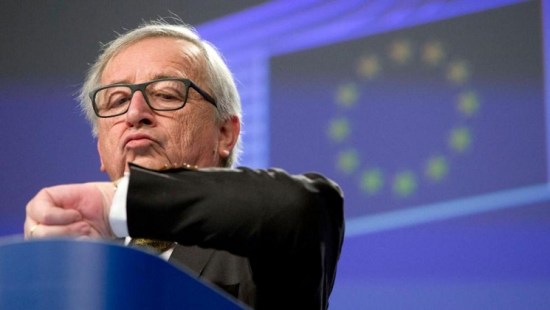
Time

The German Empire and Austria-Hungary organized the first nationwide implementation, starting on April 30, 1916. Many countries have used it at various times since then, particularly since the energy crisis of the 1970s.

A European Union online survey has concluded that a vast majority of the bloc’s citizens are against switching between summer and winter time. All signs point towards the EU now putting a stop to changing the clocks.

More than 80% of respondents to the largest online survey in EU history are in favour of abolishing changing the clocks in summer and winter, German newspaper Westfalenpost reports, citing well-informed sources in Brussels.

Es wäre sinnlos, die Bevölkerung erst zu einem Thema zu befragen, und dann, wenn es einem nicht passe, dem nicht zu folgen.

PS: Of the roughly five million Europeans who actually took part on the online survey over three million of them were German.
Not One

Not one balanced, objective review anywhere. Much less a friendly one. Everything negative and hysterical, as usual. But that was to be expected before this book was even published.

Sarrazin

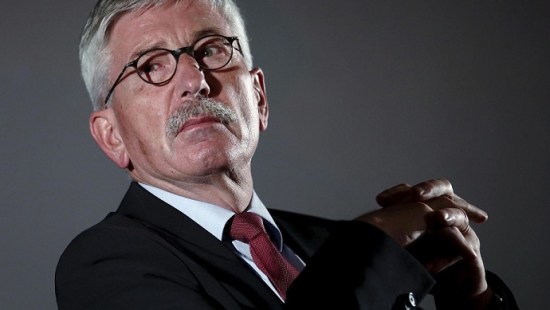
Thilo Sarrazin, the man German Gutmenschen (do-gooders) absolutely love to hate (and he’s SPD, for crying out loud), has done it again. His latest book, entitled Hostile Takeover, is another attack on Islam in Germany. Needless to say, everyone is enraged and outraged and every other kind of rage there is to be about it.

To sum it up (according to the article I linked to) he maintains: Islam is a backward religion incapable of reform, inherently violent (the step from Muslim believer to Islamist terrorist being merely one of degree), intolerant and xenophobic and that the Muslims in Germany are openly attempting to out-populate the Germans, which of course isn’t terribly hard to do. So… Where’s the controversial part of this book that everybody is all upset about? I mean, what if any of this didn’t we already know?

Vom gläubigen Muslim zum islamistischen Terroristen ist es für Sarrazin nur ein gradueller Unterschied.

Soyprise Soyprise

Just when you thought they soyrendered… The trade relationship between the United States and Europe is improving, German Agriculture Minister Julia Kloeckner said on Saturday, but there is no guarantee the bloc will buy the quantity of soybeans that Washington expects.

Soy

U.S. President Donald Trump and Jean-Claude Juncker, president of the European Commission, the EU’s executive body, struck a surprise deal on Wednesday that ended the risk of an immediate trade war between the two powers.

After the talks, Trump highlighted benefits for U.S. farmers. “The European Union is going to start, almost immediately, to buy a lot of soybeans,” he told reporters.

Kloeckner, speaking to Reuters on the sidelines of a G20 meeting in Buenos Aires, said the amount of soy Europe will import is yet to be determined.

“Will we be able to do whatever President Trump wishes for? I don’t know. Let’s see whether this will be the case or not,” she said.

Soy its back to the drawing board, folks. We’ve got another European insoyrection on our hands. Yup, another resoygence of European protectionism. But if they want a trade war then their destruction is assoyed. We’ll see who has the better chance of soyvival.

Robust Export Growth?

German exports rebounded in May, providing more evidence of a strengthening of the economy in the second quarter.

Export

Yeah, I guess that’s true. If you forget the exports last month to one particular country. Those have dropped 10% for some inexplicable reason. But I’m sure that will pick up again real soon, right?

Despite ongoing trade tensions, German exports did what they normally do: grow. In May exports increased by 1.8% MoM, from -0.3% in April. At the same time, imports increased by 0.7% MoM, from 2.6% MoM in April. As a result, the trade surplus narrowed somewhat, from EUR20.1bn to EUR19.7bn.

“Die Verunsicherung durch die Einführung von Importzöllen seitens der USA und die Gegenmaßnahmen der EU und Chinas machen sich direkt bei den Unternehmen bemerkbar.”

When Had We Left The Jungle?

I wasn’t aware that we had.

Jungle

WTO Faces Existential Threat in Times of Trump -U.S. President Donald Trump has set his sights squarely on the World Trade Organization in Geneva. Even its critics are worried that without the organization, the world of trade would revert to the law of the jungle.

The U.S. and other industrialized nations made several concessions to developing economies when the WTO was founded in 1995 and significantly reduced their tariffs. In return, they were able to push through stronger protections for intellectual property. They hoped that the strategy would help slow China’s rise.

But from the U.S. perspective, the system has not been beneficial. And once China joined the WTO in 2001, that dissatisfaction only grew, partly because the Chinese proved adept at taking advantage of the rules. Even today, there is significant dissent within the WTO because the economic superpower China is still classified as a “developing nation” by the organization, which gives it certain privileges. On the other hand, China is fighting for recognition as a market economy, to which both the U.S. and the European Union are opposed because it would mean they could no longer defend themselves against state-subsidized Chinese exports with anti-dumping duties.

On top of all that, the WTO is facing a more fundamental problem: its size and its sluggishness. Negotiating rounds focused on removing tariffs have become increasingly complex. And because everything is up for negotiation at the same time, every member state can paralyze the process by simply exercising its veto. The Doha Round, launched in 2001, is a perfect example: It never achieved any results and has become symbolic of the WTO’s failure.

“The problems are coming from the behavior of a single country that would like to return to the jungle.”

Social Democrats Using The F-Word Again

You know, Fascism? As in everybody I don’t agree with is Hitler?

Schulz

Whenever other folks see things differently than they do (this time it’s Italy’s interior minister Matteo Salvini who is hard on migration) the Enlighted Left get all excited and squirrly. German Social Democrats are no different here.

This time it was Martin Schulz (remember the Schulz Effect?) who did the name-calling, labelling Salvini’s views “near-Fascism.” Italians and Fascism fit particularly well together, see? Today’s Italian politicians, is the implication, are “radical authoritarian ultranationals, characterized by dictatorial power, forcible suppression of opposition and control of industry and commerce, which came to prominence in early 20th-century Europe.” Like breath in and out slowly a few times and take a chill pill already, Martin.

„Was wir erleben, ist eine Brutalisierung der politischen Sprache, bei der jede Form der Solidarität, des Respekts und der Würde zerstört wird. Das bedeutet das Ende der Demokratie.“

Remember This Guy?

Martin Schmidt? Or was it Meier? Müller? … Schlitz?

Schulz

Anyway, he’s back again or something. For a few seconds. Now that his fifteen minutes are up, I mean.

He and his comrades over at the SPD are mad as hell at US-Amerika‘s new Ambassador, Richard Grenell, because of, well, “perceived breaches of diplomatic etiquette” (how diplomatic).

He said in a recent Breitbart interview, for instance (Breitbart is a German news service, Breitbart meaning “wide beard” in our language), that he wanted to empower conservative forces throughout Europe. I know, right? And then he did this and then he said that and yada, yada, yada and now everyone on the left (and that’s a whole lot over here) is completely outraged because, well, it’s a slow news day/week/month so it’s time to call for somebody to fire his red, white and blue ass. If it wasn’t for outrage they wouldn’t have no rage at all.

“I think there is a groundswell of conservative policies that are taking hold because of the failed policies of the left.”

“Ich hoffe, dass der Kurz-Besuch zu einem Kurz-Aufenthalt von Herrn Grenell in seiner Funktion als Botschafter in Deutschland führt.”

Get Your Popcorn Ready

It’s May Day in Berlin! And Berliners are big on tradition.

May

Tuesday I watched the riot . . .
Seen the cops out on the street
Watched ’em throwin’ rocks and stuff
And chokin’ in the heat
Listened to reports
About the whisky passin’ ’round
Seen the smoke and fire
And the market burnin’ down
Watched while everybody
On his street would take a turn
To stomp and smash and bash and crash
And slash and bust and burn

Berliner Polizei rechnet mit heftigen Krawallen – 5300 Beamte im Einsatz

BREAKING NEWS: Germans Are More Negative Than Americans

When it comes to German-American relations, I mean. Like holy Scheiße! Who would have ever expected that?

Germans

And here I thought Germans were such positive, can-do people who  have always been so, you know, upbeat and cheerful about German-American relations. In the past, I mean. Right? This just doesn’t make any sense. It’s just not their nature. Somebody should double-check these numbers.

6 charts on how Germans and Americans view one another

1. Americans think U.S.-German relations are in good shape, but Germans disagree.

2. German attitudes toward the U.S. have turned sharply negative in the Trump era.

3. Merkel gets positive reviews from Americans, especially Democrats.

4. Many Germans see the U.S. as a top foreign policy partner; fewer Americans feel the same way about Germany.

5. Democrats are more likely than Republicans to see Germany as an important partner for foreign policy.

6. There are transatlantic differences about defense spending.

Only 11% of Germans expressed confidence in Trump to do the right thing in world affairs in 2017, down from 86% for Obama in 2016.