German Word Of The Day: Zwangsumlage

Zwangs- = compulsory. Umlage = levy, share in the costs. Put those two together and what do you get? Forced to share. But we’re talking about money here folks so let’s  just call it another tax and get it over with already.
Strom

This latest planned tax consists of forcing German households to purchase so-called “smart meters” or modern electricity meters that are supposed to regulate energy consumption by drawing electricity from that so wonderfully green German energy grid whenever this energy is cheaper. You know, like when hell freezes over?

This will only set back German consumers another 70 or 80 euros after already having been hit with a seven percent energy bill increase planned for next year, too (the seven can and will change, of course, and we all now in which direction it will be going).

Turn it around as much as you want. Anyway you turn this German energy turnaround around, you’ll always get the same result. Once you’ve turned it around, I mean. She is like way too expensive, señor.

But what can you expect from a government that is about to go retro and way back in the Wayback Machine to the good old days of SPD Never-Never Land again?

“Verbraucher sollten mit attraktiven Angeboten überzeugt, statt mit immer mehr ordnungsrechtlichen Einbaupflichten gezwungen werden.”

PS: The next German word of the day will be Abzocke. Here’s a tip: It means rip-off.

Taxing Nuclear Fuel Rods That Aren’t Being Used?

You can never be too rich or too thin, I guess. And if you’re Germany, you can never tax too much, either.

Taxation

Germany’s biggest utilities, still reeling from the country’s early exit from nuclear power, scored a major victory Tuesday when a Hamburg court said the national tax on nuclear fuel rods may violate European law.

The Hamburg finance court said it “cannot assess beyond any doubt” whether the tax on nuclear fuel used for electricity generation complies with European law. It will now ask the European Court of Justice to decide whether the levy conforms with rules that prohibit member states from creating new taxes on electricity for “general budget financing purposes.”

The tax was introduced at the beginning of 2011 and came as part of an extension of nuclear reactors’ operating lives that the government had agreed on. However, the nuclear disaster at Japan’s Fukushima power plant in March of that year triggered a U-turn in German energy policy, with Chancellor Angela Merkel ordering the immediate shutdown of the oldest plants and the early phaseout of nuclear energy by 2022. Out of 17 reactors that were in operation in March 2011, only nine are still producing power. But the fuel-rod tax remains in place, to the utilities’ annoyance.

Das Hamburger Finanzgericht will vom Europäischen Gerichtshof (EuGH) in Luxemburg zentrale Fragen zur umstrittenen Brennelementesteuer klären lassen.

Debacle, Disaster, Fiasco…

Just a reminder here again: “There is no free lunch.” Honest.

Lunch

Government intervention at its best (again). Germany’s deliberate attempt to make its energy greener using price guarantees and mandatory quotas for green energy IS NOT WORKING.

Try and remember: The whole idea was to make renewable energy more competitive and, therefore, in the end, cheaper. Well this attempt is so not working right now that German consumers pay higher prices now than ever before and German industry is soon to follow. And this, even though there is actually an oversupply of power. In essence, an energy bubble has been created because Germany’s renewable energy producers get a guaranteed minimum price for what they produce (this now includes farmers and communities and anybody else who can still get into the ponzi scheme).

Imagine you have various consumers going to a grocery store. Some of them want to buy a bottle of beer for 1 USD. Others would like to buy a bottle of champagne for 30 USD. In normal life people would just pay 1 USD for the beer and bubble-lovers would pay 30 USD for champagne. The German energy market is different. People who want the champagne pay 2 USD for it and those who want beer have to pay 2 USD. It’s a good deal for the champagne drinkers, getting subsidized by the beer buyers.

…Perhaps the least fair part of the whole scheme is how these prices disproportionately impact low-income households, who are forced to subsidize green energy for richer families to support politicians’ green energy visions.

The Big Green Machine She Is Broken

Wah? The “energy turnaround” is going to be expensive as hell? Raising taxes? Veggie Day? And the hits keep on coming. I’d ignore the polls these days too if I were a greenie.

Green

The Greens have been consistently bleeding support ever since the spring of 2011. Along the way, they have achieved a few notable successes in state elections, but the trend has been a downward one for over two years. It is as if the German electorate has suddenly decided that the party is no longer needed.

“Der Wahlkampf mit den Rezepten, wie man Kohlrouladen herstellt, ist zu Ende.”

Alternative Reality Expensive As Hell

As part of Germany’s switch to renewables, industry has been exempt from paying higher prices associated with solar and wind energy. The European Commission, however, believes the practice distorts competition on the Continent. Huge penalties could be in store.

Bill

The costs of start-up financing for green energy and the compensation for expansion of the power grid are added to customers’ electricity bills in the form of a special tax. The entire subsidy system is supposed to come to an end when green energy becomes competitive. That, at least, is the theory.

But the reality is different. No longer can one simply describe the tax as a way to get renewable energies off the ground. Indeed, following Berlin’s decision two years ago to shelve nuclear energy and accelerate the expansion of renewables, the EEG (Renewable Energies Act) has become a giant redistribution machine.

“The fact that German electricity prices are among the highest in Europe despite relatively low wholesale prices must serve as a warning signal.”

This Was Not Planned So It Cannot Be Happening

Or will not be happening, I should say.

Fracking

As you know, Germany is green. And Germans are greener than green. Why, Germans are so green that Jamaicans want to roll them up and smoke them.

And Germans also like sticking to “the plan,” too (think Stalingrad). So they do not, I repeat do not appreciate it when, as in this case, their ambitious environmental plans get disturbed by unforseen technological developments that were not considered in the original plan and therefore start turning the whole Schlamassel (mess) into a really, really big and annoying, well, Schlamassel (think Stalingrad again).

It goes like this: “Ambitious environmental goals are far less meaningful if the economy withers in achieving them.” So when something really tempting comes along like shale gas drilling (hydraulic fracturing or “fracking”), a technology that could give Germany access to enough reserves to feed natural gas demand for 20 years, then that gets not-so-thoroughly-green people (yes, there still are a few specimens left) to thinking, plan or not.

So there we have it. And that’s the end of it (ask any German Green Shirt). Fracking can’t happen here. It is ideologically inadmissable. Fracking is something that those crazy Americans and their evil multi-national oil companies do, not us (multi-national oil companies are always American, by the way – don’t ask). Nope, fracking can never happen here. Never in a million years. Not this year anyway.

“We are sitting on Swiss cheese. The risks are just too high.”

Berlin’s Rotten Infrastructure Indirectly Responsible For The Death Of This Poor Little Rat

This was gross negligence on the part of power supplier Vattenfall, if you ask me. And even grosser, uh, something for the guy who had to clean up the mess afterwards.

Rat

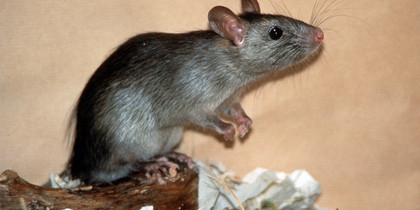
An innocent and relatively harmless rat was way too easily able to make his way through some little hole in the wall of a network power station place in Tempelhof today and cause a short in a 10,000 volt power line that took down the power for some 2,200 apartments and 170 businesses in the area.

Needless to say, this action took down the rat, too. We can only hope that it was clean, green energy that got him.

Erst vor wenigen Wochen hatte eine Ratte einen Stromausfall im havarierten japanischen Atomkraftwerk Fukushima Daichii ausgelöst.

No Contradiction Here

Just move along, folks. Nothing to look at here.

Loans

While German dedication to saving the German environment by ridding the country of nuclear power is in full swing (sort of), the German government has absolutely no problem using public money to guarantee the construction of nuclear power plants in other countries at the same time.

It’s not a contradiction really, though. Honest. Environment Minister Peter Almaier’s current ministry slogan is “high time that something changed” and they are even trying to set up an international club of countries who have done/will do away with nuclear energy. And that’s the main thing. So something has changed, sort of. The countries Germany is helping to build atomic energy programs for just won’t be allowed to join their club, that’s all.

“It is a gross contradiction, that we are pushing forwards with the change in energy generation while supporting atomic energy abroad.”  

The N-Word

You know, it starts with an n and ends with an r*? Do not even think about using it over here in Germany these days, people. Not that you would even want to or anything, even if you could. I’m just sayin’.

Why is this the case? I’ll tell you why. Because everybody’s all touchy these days. German power grids are less stable than they ought to be and nobody wants to address the reason why that is. Folks have gotten all sensitive and defensive because, well, because of that “power networks more unstable since n-word drop-out” thing.  And no, I didn’t think up that subtitle. I’m just quoting it, sort of. Civilized folks don’t use the n-word. And I ain’t a-gonna use it either.

Kritisch werden könnte es nach Auffassung von Fachleuten generell vor allem in Süddeutschland, wo der Strom der abgeschalteten Atomkraftwerke fehlt.

* “Nuclear”

Who Needs Sandy?

Thanks to this dad gern new-fangled Energiewende (energy turnaround), the power goes out in Germany “mit ohne” (without) a damned hurricane these days.

Es ist 16:32 Uhr, für die meisten ist der Feierabend nicht mehr weit. Da zuckt in den Büros kurz das Licht. Im Stadtteil Griesheim gehen die Lampen sogar ganz aus. Zeitumstellung. Es ist dunkel. Rund um die Innenstadt bricht mitten in der Rush Hour der Verkehr zusammen. Die Ampeln tun – zumindest nördlich des Mains – ihren Dienst nicht mehr. S- und Straßenbahnen bleiben auf offener Strecke stehen. In den U-Bahnen geht die Notbeleuchtung an.