Germany Can’t Abolish The Death Penalty

It never had one to begin with (not since the war).

Death penalty

Germany abolishes death penalty in public vote. But please read a little further: The ballot was purely symbolic, because Germany’s federal constitution and European treaties mean the death penalty is already banned in the country as these override state law.

Germany is a country where lebenslänglich (a life sentence) is fifteen years and somebody wants to suggest that they have a death penalty here? It’s interesting fake news, I guess, but it’s fake news all the same.

“There was a fear if a terrible crime was committed… then the vote could do the wrong way.”

PS: And yes, despite that morbid theme, Happy Thanksgiving!

German Of The Day: Kindergeld

That means child benefit payments. The “Kindergeld” benefits consist of monthly payments for each child in a family, starting at €192 per month per child for the first two children. Payments are then staggered depending on the number of children.

Kindergeld

The funny part is – hardy, har, har – these German Kindergeld payments are also going to parents of children who don’t even live in Germany but in other EU countries (€600 million per year). It’s another big scam, in other words. This has raised some concern here in Germany, believe it or not, and attempts have been made to restrict this.

So the really funny part is – hardy, har, har, har, har, har – is that the unelected officials over at the EU Parliament’s Sozialausschuss (Social Committee) have just ruled that Germany has to keep on making these payments anyway or else face disciplinary action from the EU. Wow. When Brussels says “social” (something for free), they mean it. You wanted Europe, Germany. Now you’ve got it. And you can bet there will be more good stuff like this to pay for in the future.

Deutschland, Österreich und Dänemark hatten gefordert, dass das Kindergeld für Ausländer an das Preisniveau des jeweiligen EU-Landes angepasst wird. Der Vorstoß ist im Sozialausschuss des EU-Parlaments gescheitert.

German Of The Day: Preiserhöhung

That means price rise. For German electricity bills, in this case. Another big one on the way. Wonder why?

Energy

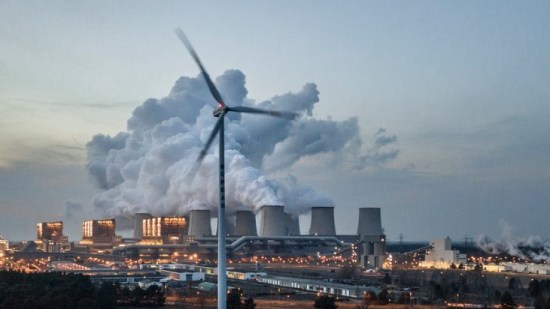
Keen to drastically reduce greenhouse gas emissions and transform its energy sector, German leaders adopted a vast program called Energiewende eight years ago and the country prides itself on setting the pace for change in the European Union…

But earlier this year, officials admitted the country will not hit the 2020 goal, saying it would reach 32 percent at best (40 percent was the goal).

Greenhouse gas emissions in Germany have not decreased for the last nine years and emissions from the transportation sector have not fallen since 1990. In fact, the United States has reduced carbon emissions more than Germany, in both real and nominal terms…

The growing pains have led to higher prices, largely shouldered by residential power customers.

Between 2015 and 2017, Germany inched ahead of Denmark for the highest electricity prices for household customers (35 cents per kilowatt-hour, in U.S. currency), according to the statistical office of the European Union.

Viele deutsche Haushalte müssen im kommenden Jahr deutlich mehr für Strom bezahlen. Berechnungen von Online-Vergleichsportalen zeigen, dass die Preise in der Grundversorgung um durchschnittlich vier bis fünf Prozent steigen werden.

Shoot The Hoop

Better late than never. Actually, maybe never would have been better than late this time but you never know about never. Before it’s too late.

Hoop

Angela Merkel traveled to Chemnitz Friday to meet with residents, three months after the eastern city was the scene of violent, far-right protests that highlighted divisions in Germany — and the chancellor’s own party — on the issue of migration.

Merkel met with the Niners Chemnitz — a local basketball team — before heading to a town hall-style discussion with readers of the Chemnitz Freie Presse newspaper at which the recent unrest was expected to be a central issue.

The protests were triggered after the killing in August of a German man that authorities blamed on recent migrants. Far-right groups flocked to the city, about 200 kilometers (124 miles) south of Berlin, clashing with counter-protesters in scenes that drew widespread condemnation.

Ludwig warf der Kanzlerin eine „praktisch seit drei Jahren währende Sprachlosigkeit“ vor, deren Folgen sich besonders beim Thema Integration zeigten. Die Debatte werde viel zu oft denen überlassen, die Ängste oder tatsächliche Probleme instrumentalisierten.

Germans More Important Than You Think

But not more important than they think. And this is important. I think.

Germans

The perception of which countries wield the most influence on the international stage can be in the eye of the beholder. People around the world largely agree that China has become more important over the past 10 years and are more mixed about the roles that Russia, India, Germany, France, the United Kingdom and the United States play. But people in Russia, India and Germany stand out for being much more likely to say their country is playing a bigger role in world affairs than do people in other countries, according to a Pew Research Center survey.

For example, 72% of Russians say their country is playing a more important role in the world today than it did a decade ago. This compares with a median of 41% across the 25 other countries surveyed. Indians and Germans are similarly rosy-eyed about their own countries, while global evaluations are much more circumscribed.

In contrast, American, French, and British views of their own country’s importance on the world stage generally mirror the median view in the other countries surveyed.

Russians, Indians, Germans especially likely to say their countries are more globally important.

When’s The Next Whammy?

November 9 in Germany is kind of, I dunno, creepy or something. Is there a pattern developing here?

November 9

1918: On November 9, 1918 the Social Democrats’ deputy chairman Philipp Scheidemann rushed to the balcony of Berlin’s Reichstag parliament to announce the birth of what would become the Weimar Republic.

1923: Adolf Hitler, the then relatively unknown Nazi Party leader, and his cronies tried to seize power with a coup that started in a crowded Munich beer hall on November 9, 1923.

1938: Nazi thugs torched synagogues, smashed Jewish-owned shops and rounded up Jewish men across Germany on November 9, 1938, in what became known as “Kristallnacht” or the “Night of Broken Glass.”

1989: The fall of the Berlin Wall in a bloodless revolution on November 9, 1989 is a joyous milestone in German history, ending 28 years of Cold War separation.

2016: Donald Trump was elected President of the United States of America. OK, the election was on November 8 but the Germans didn’t get the results until November 9.

So are we overdue here again, Germany? Maybe the Merkel regime will be ousted later tonight in a bloodless coup. Maybe not. Maybe there might be a little blood, too. Hard to say for sure. Stay home, stay tuned and keep your doors bolted shut.

German Of The Day: Unerklärlich

That means inexplicable.

Islamophobia

You know, inexplicable like of all places on earth it’s inexplicable that Islamophobia and xenophobia could be on the rise in Germany. But it is. What could possibly be behind it?

Prejudice towards Muslims and foreigners is rising in Germany, a study has revealed.

More than 44 per cent of Germans believe Muslims should be banned from immigrating, compared to 36.5 per cent in 2014, the Competence Centre for Right-Wing Extremism and Democracy Research found.

The poll found more than one in two (55.8 per cent) said the number of Muslims made them feel like strangers in their own country, while 43 per cent gave the same answer four years ago, the Die Welt newspaper reported.

“We want a leader who governs the country with a firm hand for the good of all.”

Your Tax Euros In Action

You know the drill. These studies are routinely published (in this case by the German Federation of Taxpayers) demonstrating how tax money is burned by the government.

U-Boot

There were some real beauties in this report, too. But my personal favorite is the Case of the Squandered Submarines. The German navy has these six way cool new fuel cell driven submarines that set the German taxpayer back three billion euros. The only problem here is that none of them are currently operational and have spent most of their time dry-docked. Additionally, there are only three submarine commanders available to command these vessels. One of these subs has only been deployed once – in thirteen years. Wow. With a navy like this who needs an enemy?

And I’m sure the next tax increase is already in the works.

Die sechs U-Boote der deutschen Marine mit Brennstoffzellenantrieb gehören zum Modernsten, was die Nato in diesem Bereich zu bieten hat. Drei Milliarden Euro kosteten sie. Das Problem: Laut Schwarzbuch ist keines dieser U-Boote derzeit tatsächlich einsatzbereit.

Germany Idealistic, Naive And Leftist?

How ya figure?

Maassen

“I’m seen in Germany as a critic of idealistic, naive and leftist foreign and security policy,” the fired head of German domestic intelligence said on his way out. He just got put out to pasture. Early. Thought criminals pay heed.

Dismissed when he questioned the authenticity of videos showing far-right extremists chasing immigrants in the eastern city of Chemnitz, Maassen became the lightening rod of German self-righteous rage.

This time Maassen, whose agency monitors extremist threats to Germany’s constitutional order, compared the videos to Russian propaganda and presented himself as the victim of a witch-hunt by “radical-left forces” in the Social Democratic Party (SPD), junior partner in Merkel’s coalition.

“I can imagine a life outside public service, for example in politics or business.”

“Trump Still Clicks”

CNN title: Trump’s been president for two years. Germans still can’t look away. Nor will they look away. Because they can’t.

Trump

Why should this surprise anyone? This a perfectly normal everady pathological German obsession, no different than their irrational infatuation with Obama before Trump and their Verteufelung (demonization) of Bush before him (and on and on it goes). Germans are hysterical in these matters. It’s a collective psychological issue, an obsession with US-Amerika in the end. What is more, this collective hysteria is very profitable for the brain police in German media who milk it daily.

I’ve always liked this guy’s take on it (a Spiegel man himself): “German schadenfreude knows no bounds, particularly when it comes to the United States. The country loves to feel superior to a superpower like America. Yet Germany also harbors a childish infatuation with Obama — one which has little political grounding. The reasons are psychological. …The criticism of America has always been a bit infantile. One is familiar with the theory from psychoanalysis, when people talk about transference, or when suppressed feelings or emotions are overcome by projecting them onto others. It may work for a while, improving one’s feeling of self-worth by devaluing an imagined adversary. But it always falls short. Which is why the ritual must be constantly carried out anew.” – Jan Fleischhauer

Over two floors of Der Spiegel’s glasshouse building, walls bearing seven decades of the magazine’s covers serve as a colorful chronology of modern history. On one wall are cartoons of an angry yellow-haired man that are so provocative they’re impossible to miss.

“Trump still clicks, people are interested in those stories — and the same applies to our magazine stories and covers.”