He’s Back

I’m really starting to like this guy. Günter Grass has now become so predictably “bad” that he’s good.

Grass

This week provided yet more proof that the 85-year-old has jumped the shark. In a Wednesday appearance with this year’s SPD candidate for chancellor, Peer Steinbrück, Grass took it upon himself to blast Chancellor Angela Merkel and, in a verbal assault not without irony, to criticize her past as a member of the East German youth organization FDJ, the Communist Party’s version of the Boy and Girl Scouts.

In condemning Merkel for “tarnishing our relations with our neighbors in an extremely short amount of time” by virtue of the course she has pursued in the euro crisis, Grass said that her approach is a product of her political upbringing. “During her time in the FDJ, she learned conformity and opportunism. Under (former Chancellor Helmut) Kohl, she learned how to wield power.”

“Günter Grass, of all people, a man who kept his own membership in the SS silent for decades, is now criticizing Angela Merkel’s past in East Germany? That is nothing but an embarrassment.”

PS: Speaking of German heros, Edward Snowden is becoming more heroic here in Germany with every passing day.

„Das ist schon heldenhaft, sich gegen solche Organisationen aufzulehnen.”

Our CO2 Doesn’t Stink

Or maybe it’s green or something. At any rate, Germany just managed to block the adoption of new emissions limits for cars produced in the European Union. This was necessary because, well, this legislation would have handicaped Germany’s automobile industry, focused as it is on the luxury car sector.

Cars

Germany has long seen itself as a leader when it comes to efforts to reduce CO2 emissions and combat climate change. Indeed, Chancellor Angela Merkel’s government remains committed to radically expanding its reliance on renewable energies in the coming decades.

But when it comes to reducing the amount of greenhouse gases German-made automobiles produce, Berlin is far less ambitious.

“It is a scandal.”

Discountrepublik Deutschland

Verblüffender Befund (an amazing finding)? I don’t see how it could amaze anyone here – anyone who has ever gone shopping in Germany and then compared those prices to those you would pay in other European countries, that is.

Prices

Germans apparently aren’t aware of the fact that they have some of the lowest Lebenshaltungskosten (living costs or cost of living) in all of Europe. Of their immediate neighbors, it’s only cheaper to live in Poland and Czechia.

What is really amazing I find, however, is the fact that the Germans are able to enjoy these cheap prices while still having a higher per capita GDP than a lot of the European countries with a higher cost of living (Belgium, Denmark, France).

Beats the hell out of me. Hey, es darf eben nichts kosten here.

Verbraucher in Deutschland bekommen für ihren Euro mehr als die Menschen in den Nachbarländern. Lediglich bei den Nachbarn in Polen und Tschechien sind die Lebenshaltungskosten niedriger.

We Looted The Loot First

The grand opening of a joint German-Russian art exhibition in St Petersburg was spoiled on Friday when Moscow objected to Angela Merkel’s plan to use her speech to refer to hundreds of looted German works of art looted by Red Army soldiers after the war.

Art

The Germans claim that some 1 million looted objects are still missing, including the Treasure of Priamos, objects looted by the Germans in Troy under the direction of Heinrich Schliemann way back in 1873.

Moscow appears to be open to compromise, but only when the Russian artworks destroyed by German troops during World War II – estimated to be more than 110m books and publications following the plundering of 427 Soviet museums and 4,000 libraries – be returned, as well.

“This is a very touchy question for the societies of both countries. We need to look for solutions, rather than inflating the problem.”

Germans Concerned Global Warming Stagnation Stagnating Too Fast

SPIEGEL: Mr. Storch, Germany has recently seen major flooding. Is global warming the culprit?

Storch: I’m not aware of any studies showing that floods happen more often today than in the past. I also just attended a hydrologists’ conference in Koblenz, and none of the scientists there described such a finding.

Stagnation

SPIEGEL: Would you say that people no longer reflexively attribute every severe weather event to global warming as much as they once did?

Storch: Yes, my impression is that there is less hysteria over the climate. There are certainly still people who almost ritualistically cry, “Stop thief! Climate change is at fault!” over any natural disaster. But people are now talking much more about the likely causes of flooding, such as land being paved over or the disappearance of natural flood zones — and that’s a good thing.

SPIEGEL: Will the greenhouse effect be an issue in the upcoming German parliamentary elections? Singer Marius Müller-Westernhagen is leading a celebrity initiative calling for the addition of climate protection as a national policy objective in the German constitution.

Storch: It’s a strange idea. What state of the Earth’s atmosphere do we want to protect, and in what way? And what might happen as a result? Are we going to declare war on China if the country emits too much CO2 into the air and thereby violates our constitution?

SPIEGEL: What could be wrong with the models?

Storch: There are two conceivable explanations — and neither is very pleasant for us. The first possibility is that less global warming is occurring than expected because greenhouse gases, especially CO2, have less of an effect than we have assumed. This wouldn’t mean that there is no man-made greenhouse effect, but simply that our effect on climate events is not as great as we have believed. The other possibility is that, in our simulations, we have underestimated how much the climate fluctuates owing to natural causes.

Germans See Germans Do

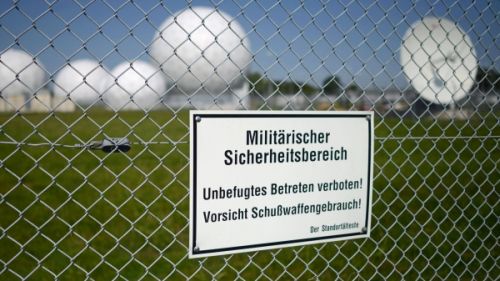
Shocking, these Americans and their surveillance state. It’s good to know that that kind of thing can’t happen here.

BND

Despite the scandal concerning the US spy program Prism, the Bundesnachrichtendienst (Federal Intelligence Service) is planning to monitor the Internet more thoroughly. 100 million euros are to be invested with more technical equipment and up to 100 more personnel planned.

Meanwhile… Federal Minister of the Interior Hans-Peter Friedrich (CSU) is arguing for a flight passenger security check system similar to the American model for those who enter Europe. German security services should be able to check to see “if someone is on the wanted or prosecuting authority lists” before the start of the journey.

So geht man nicht mit Freunden um, die im Kampf gegen den Terrorismus unsere wichtigsten Partner sind”, sagte der Minister der “Welt am Sonntag”. Friedrich betonte, Deutschland sei von Datenzulieferungen aus den USA abhängig. Es sei bekannt, “dass es die US-Geheimdienste sind, die uns immer wieder wichtige und richtige Hinweise gegeben haben“.

Black Workers Are Everywhere These Days

No, not Afro-American workers. You know, Schwarzarbeiter (illegal workers).

Black

And they’re everywhere all over Europe these days, although Germany is the champion here again too, as usual.

Eight million Germans are working on the black market as we speak, so-to-speak, generating about 13 percent of the country’s economic output. And loving it, I hope for them, because many of them just don’t seem to have any choice in the matter. Nobody will hire them otherwise:

Punitive tax regimes, increased labor market regulation and a growing lack of trust in governments are causing many Europeans to abandon formal employment and enter into the murky, illicit world of shadow economies worth billions of dollars.

Unternehmen und Arbeitnehmer setzen auf Schwarzarbeit, dadurch entstehen zwei Drittel des Schadens. Für das weitere Drittel ist verantwortlich, dass viele zu geringe Einkommen und Erträge ausweisen.

Tugendterror

Or “virtue/politically correct terror,” if you prefer. Even some Germans now (in this case Thea Dorn for Die Zeit – “Deutsche Sitten” – no link yet) have come to realize that those who might still prefer to have the right to choose for themselves are losing Lebensraum (their habitat) fast.

Tutelage

A German Opera house decides to cancel a production from their repertoire because several spectators needed medical attention (they were traumatized) after the premiere. A leading SPD politician openly discusses the possibility of limiting the speed limit to 120 kmh on German autobahns. The Greens specify in their party program to do away with the reduced value added tax rate currently granted for fast-food and to forbid the use of wild animals in circuses.

The German (or European) citizen who still expects to be able to decide for him- or herself on matters of this nature  (whether to attend the opera performance or not, drive the speed he/she wishes on certain stretches of the autobahn, eat fast-food, etc.)  is frowned upon ever more these days because, well, there are others out/up there more enlightened than him/her to make these decisions for them. This is the essence of socialist and/or Green thinking. This makes everything safe. And predictable. And correct sowieso (at the very least).

Autonomy means being able to assess what I can expect of myself and of my environment to put up with. Living means not letting myself be knocked down by injuries or setbacks. But how can I learn either of these things if our society becomes an omnipresent governess keenly taking care that her wards never get carried away?

How indeed. They don’t want you to get carried away. Or get away at all, for that matter, ever. That’s the point. Just curb your enthusiasm already and keep on voting for more tutelage.

Man kann sein Leben zu Tode verschwenden, andere zu Tode schinden. Wir sind dabei, uns zu Tode zu schonen.

Alternative Reality Expensive As Hell

As part of Germany’s switch to renewables, industry has been exempt from paying higher prices associated with solar and wind energy. The European Commission, however, believes the practice distorts competition on the Continent. Huge penalties could be in store.

Bill

The costs of start-up financing for green energy and the compensation for expansion of the power grid are added to customers’ electricity bills in the form of a special tax. The entire subsidy system is supposed to come to an end when green energy becomes competitive. That, at least, is the theory.

But the reality is different. No longer can one simply describe the tax as a way to get renewable energies off the ground. Indeed, following Berlin’s decision two years ago to shelve nuclear energy and accelerate the expansion of renewables, the EEG (Renewable Energies Act) has become a giant redistribution machine.

“The fact that German electricity prices are among the highest in Europe despite relatively low wholesale prices must serve as a warning signal.”